


WP1788—The Ouroborical Loop
Madison’s Factions in Action
Introduction
Every enduring human institution eventually confronts the same question. How can it remain faithful to its original mission after those who founded it are gone?
History offers a discouraging answer. Governments become authoritarian. Corporations lose sight of their customers. Nonprofit organizations drift from their charitable purpose. Universities become captive to ideology. Scientific institutions become vulnerable to political influence or financial incentives. Professional associations begin serving themselves rather than the professions they were created to advance. Although these institutions differ dramatically in purpose, they repeatedly suffer from the same underlying problem: the gradual concentration of power.
This recurring pattern suggests that institutional failure is not primarily the result of defective missions. Rather, it is the predictable consequence of ordinary human nature operating within imperfect organizational structures.
The American Founders confronted precisely this problem. Their response was neither naïve optimism nor cynical resignation. Instead, they developed one of history’s most remarkable engineering achievements: a constitutional system deliberately designed to restrain power by distributing it. For more than two centuries, constitutional government has demonstrated that institutions can remain remarkably resilient even though the people governing them remain imperfect.
This paper asks a simple but surprisingly neglected question: If constitutional principles can preserve governments, why should they not preserve other important human institutions as well?
The answer leads beyond constitutional law into what may become an entirely new engineering discipline.
We call that discipline Constitutional Engineering.
Relationship to the Series
This paper builds directly upon WP112—Constitutional Business Alliances: Going Beyond Capitalism, which introduces the constitutional architecture of a Constitutional Business Alliance (CBA). Readers unfamiliar with CBAs may wish to review that paper before continuing. The present paper extends that architecture by introducing the Constitutional Enterprise Association (CEA) and the Ouroborical Loop, which provide an additional layer of constitutional checks and balances above the enterprise level.
1. The Universal Problem
Every organization begins with a mission. A business exists to create value for customers. A university exists to educate and discover knowledge. A charity exists to serve those in need. A scientific institution exists to discover truth. Yet over time something often changes. Decision-making becomes centralized. Leadership becomes insulated. Accountability weakens. Internal interests gradually displace external purpose. The institution slowly begins serving itself rather than the mission for which it was originally created.
Sometimes this deterioration results from intentional corruption. More often it arises through perfectly ordinary human behavior. People naturally protect their own authority. Organizations naturally seek stability. Leaders naturally resist surrendering power once it has been acquired. None of these tendencies require malicious intent. They simply reflect the imperfections of human beings operating within institutional structures that unintentionally reward concentration of authority.
The problem, therefore, is not merely ethical. It is architectural. The central challenge confronting every enduring institution is how to preserve institutional integrity despite the ordinary imperfections of the people entrusted with its governance.
.
2. Madison’s Great Insight
James Madison confronted this problem more directly than perhaps any political philosopher before him. In Federalist No. 10, Madison recognized that factions inevitably arise wherever human beings possess differing interests, beliefs, ambitions, or economic incentives. He did not imagine that education, morality, or enlightened leadership could permanently eliminate these differences. Nor did he believe liberty should be sacrificed merely to suppress disagreement. Instead, Madison accepted faction as a permanent feature of human society.
His genius lay elsewhere.
Rather than attempting to eliminate competing ambitions, he designed constitutional institutions capable of channeling them. Power would not disappear. It would compete. Each constitutional branch would possess both the authority and the incentive to resist encroachments by the others. Separate institutions would derive legitimacy from different sources. No single office would permanently accumulate unlimited authority without encountering constitutional resistance.
The Constitution therefore represents far more than a legal document. It is an engineering solution to a recurring human problem. Rather than assuming perfect rulers, it assumes imperfect people operating within carefully distributed systems of authority. Its objective is not perfect government. Its objective is durable institutional integrity.
3. Beyond Government
Once Madison’s insight is understood as constitutional architecture rather than merely political philosophy, a much larger question naturally emerges.
If constitutional principles preserve governments… why should they not preserve businesses? Why not universities? Why not research institutions? Why not nonprofit organizations? Why not international associations? Why not professional societies?
The dangers confronting these organizations are strikingly familiar. Concentrated authority. Mission drift. Institutional capture. Weak accountability. Declining public trust. These are constitutional problems even when they arise outside government.
This observation leads naturally to a broader discipline.
Constitutional Engineering may be defined as:
The systematic application of constitutional principles to the design of resilient institutions wherever concentrated power threatens long-term institutional integrity.
Under this broader view, constitutions are not merely legal instruments. They are engineering systems. Their purpose is to distribute authority in ways that make corruption, institutional capture, and mission drift progressively more difficult to sustain.
The Constitution of the United States becomes not merely a successful governmental document, but the earliest large-scale demonstration of a universal engineering philosophy.
4. Constitutional Business Alliances
A Constitutional Business Alliance (CBA) illustrates how constitutional principles can be applied beyond government. Rather than concentrating authority within a traditional corporate hierarchy, a CBA deliberately distributes constitutional responsibility among independent governing institutions.
An executive branch manages operations. A legislative branch establishes policy and represents multiple constituencies. An independent judiciary interprets the organization’s constitution and resolves constitutional disputes. Each branch derives its legitimacy independently rather than through delegation from a single executive authority. Checks and balances become organizational safeguards rather than governmental peculiarities.
The objective is not bureaucratic complexity. It is institutional resilience. Just as constitutional government assumes that no public official should possess unlimited authority, constitutional enterprises assume that no executive, board, investor, or stakeholder should permanently dominate the institution’s constitutional purpose. Figure 1 illustrates how these constitutional responsibilities are intentionally separated within a single Constitutional Business Alliance.
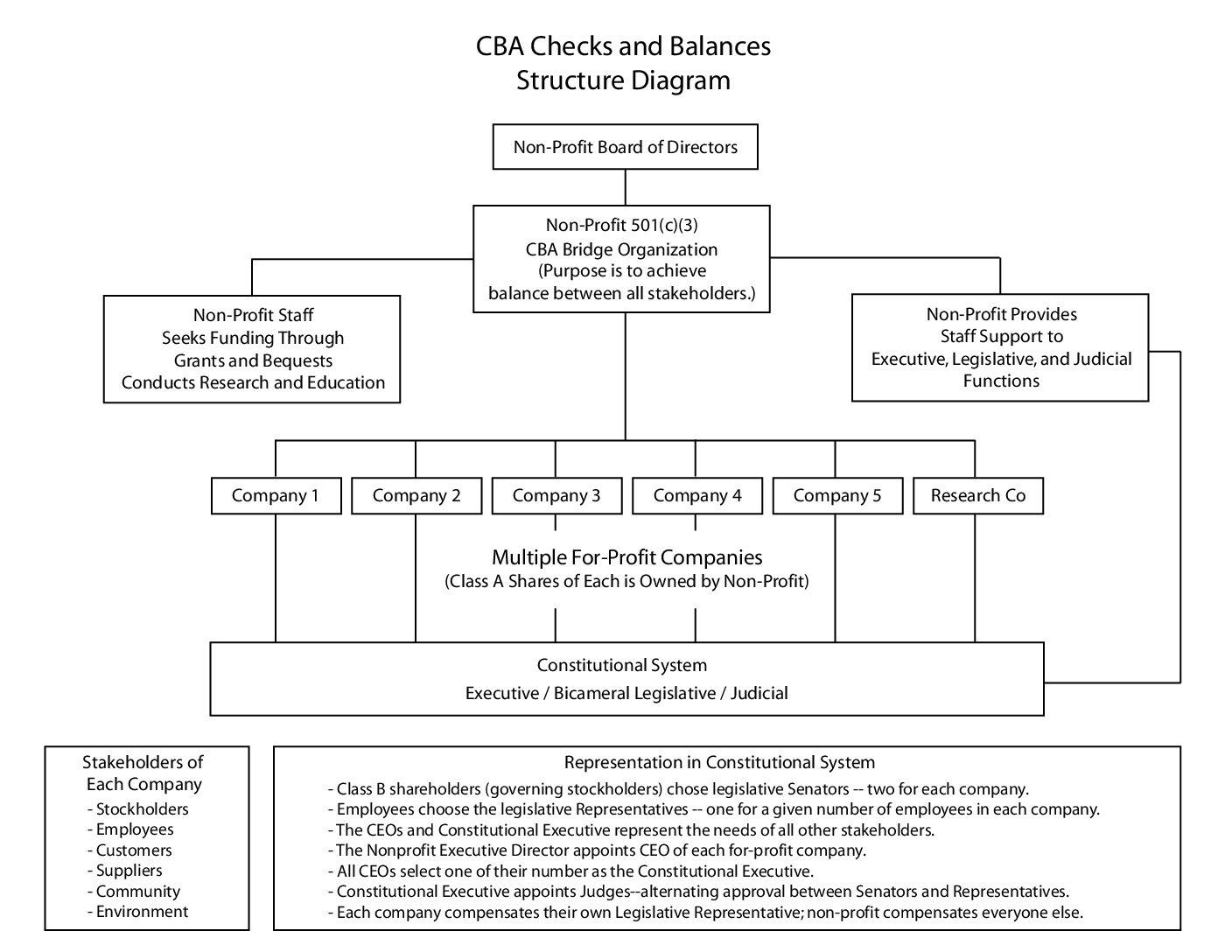
Figure 1. Constitutional Architecture of a Single Constitutional Business Alliance (CBA)
Figure 1 demonstrates that constitutional authority is intentionally separated from operational authority. The executive manages the enterprise, but constitutional legitimacy is distributed among independent institutions rather than concentrated in a single chain of command. No branch derives all of its authority from another. Instead, each serves as both a participant in the organization and a constitutional restraint upon the others.
Once this architecture is understood, another question immediately arises.
Who governs the governors?
5. The Missing Constitutional Layer
Constitutional organizations solve many governance problems. They do not solve all of them.
An individual constitutional enterprise may itself become influential. Multiple constitutional organizations may begin cooperating. Shared standards emerge. Certification develops. Collective authority gradually accumulates. Ironically, the institutions originally designed to resist concentrated power may themselves begin concentrating constitutional influence.
The constitutional problem therefore reappears at a higher level.
Who constitutionally governs constitutional organizations?
If no answer exists, constitutional authority eventually terminates at another concentration of power. The architecture remains incomplete.
What is needed is not greater authority. It is another constitutional layer.
6. The Ouroborical Loop
The ancient symbol of the Ouroboros traditionally depicts a serpent consuming its own tail. Across history it has represented continuity, renewal, and self-reference. Variations of the symbol also portray two serpents, each consuming the other’s tail, emphasizing reciprocity, interdependence, and continuous mutual renewal. Constitutional Engineering adopts this broader symbolism for an entirely different reason. The governors themselves become constitutionally governed. Authority no longer terminates at a final institutional summit. Instead, constitutional oversight continuously returns upon itself through reciprocal governance. Whether represented by one serpent or two, the essential idea remains the same: constitutional authority forms a continuous, self-correcting cycle rather than ending in a single concentration of power.
Within this system, Constitutional Business Alliances voluntarily associate to form a Constitutional Enterprise Association (CEA). The CBA members collectively govern the constitutional association. The constitutional association, in turn, governs the constitutional standards under which its member organizations operate. Neither becomes constitutionally supreme. Each limits the authority of the other. Operational authority flows downward. Constitutional accountability flows upward. The result is a continuously self-correcting constitutional ecosystem.
It is helpful to distinguish between two complementary layers of institutional architecture. The Hierarchical Layer consists of the individual organizations that carry out their respective operational missions. They produce goods, deliver services, conduct research, educate students, or otherwise fulfill their organizational purposes. Above this operational layer lies the Ouroborical Layer, composed of Constitutional Enterprise Associations and the reciprocal constitutional relationships through which member organizations collectively govern one another. The Hierarchical Layer advances institutional missions. The Ouroborical Layer provides constitutional stewardship to preserve the integrity under which those missions are pursued.
Every Constitutional Business Alliance therefore participates simultaneously in both layers. Within the Hierarchical Layer, it functions as an independent enterprise pursuing its own organizational mission. Within the Ouroborical Layer, it assumes an additional constitutional responsibility by participating in the constitutional stewardship of the broader institutional ecosystem. These roles are complementary rather than competing. One advances the organization’s mission; the other helps preserve the constitutional integrity that enables every member organization to pursue its mission.
Unlike governments, CEAs derive authority only through voluntary constitutional association rather than territorial sovereignty. Participation rests on consent, shared constitutional commitments, and the continuing freedom of constitutional association and disassociation.
The reciprocal constitutional relationships within this higher constitutional layer form what may be called the Ouroborical Loop. Rather than terminating constitutional oversight at the level of a single enterprise, the Ouroborical Loop extends constitutional checks and balances across a community of independently governed Constitutional Business Alliances. Figure 2 illustrates this constitutional architecture.
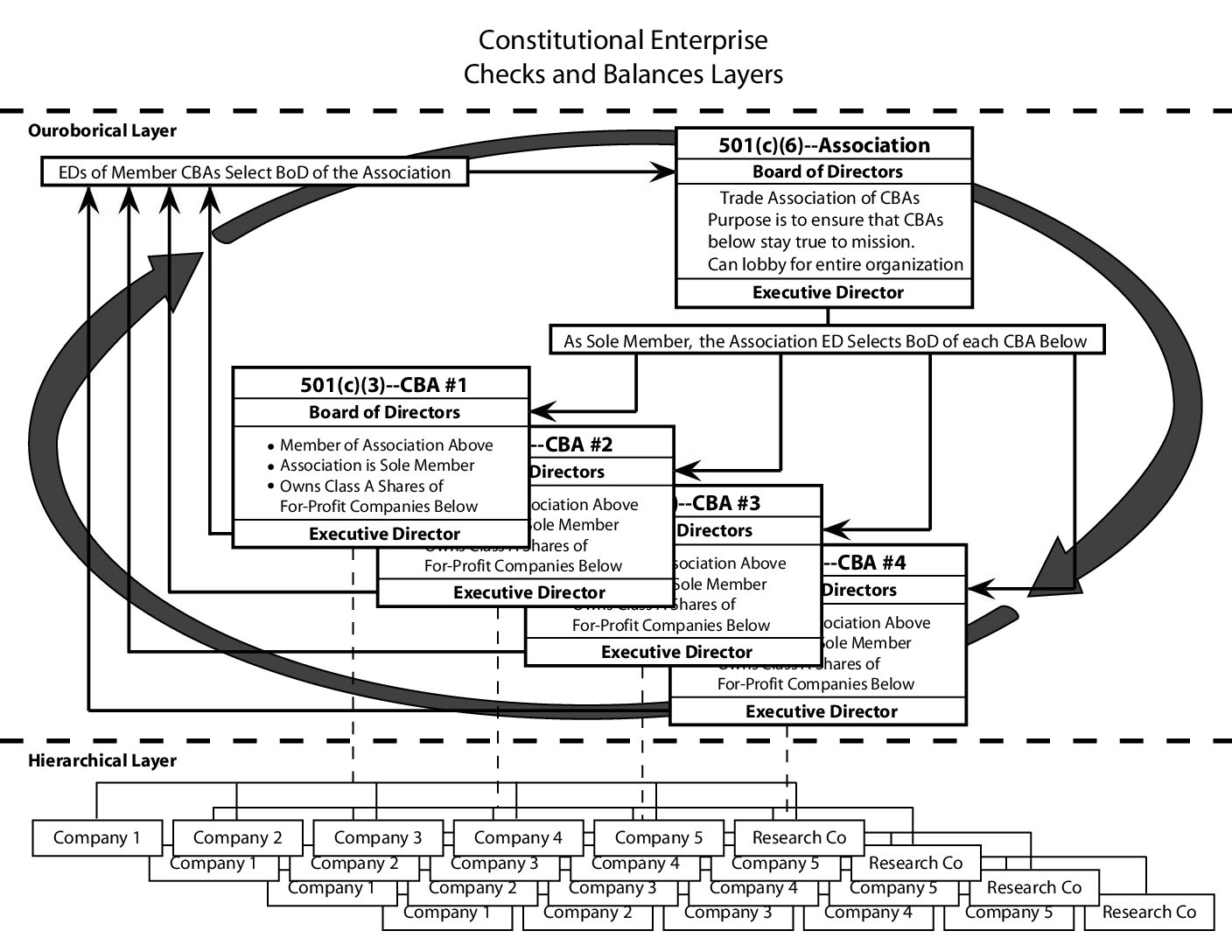
Figure 2. The Ouroborical Loop—Reciprocal Constitutional Stewardship Among Constitutional Business Alliances
Figure 2 completes the constitutional architecture introduced earlier by illustrating the relationship among multiple Constitutional Business Alliances operating within a Constitutional Enterprise Association. Each CBA remains an independent enterprise, responsible for pursuing its own mission within the Hierarchical Layer. At the same time, each voluntarily assumes a second constitutional role within the Ouroborical Layer by participating in the constitutional stewardship of the broader association.
Constitutional authority therefore does not terminate within any single organization. Instead, constitutional responsibility is distributed among independent member organizations that collectively preserve the constitutional integrity under which every enterprise operates. No member governs itself alone, and no member possesses constitutionally supreme authority over the others. Each simultaneously receives constitutional stewardship from the association while contributing to the constitutional stewardship of the association.
The answer to the paper’s central question is surprisingly simple.
The governors are themselves governed.
The Ouroborical Loop transforms constitutional oversight from a terminating hierarchy into a continuing constitutional cycle. Rather than asking, Who governs the governors? and answering with yet another higher authority, Constitutional Engineering answers by distributing constitutional stewardship through reciprocal checks and balances among independent institutions. Constitutional authority returns upon itself—not as an endless hierarchy, but as a self-correcting constitutional ecosystem.
7. Constitutional Competition
No constitution should assume that it has achieved perfection. The American Founders certainly did not. The Constitution itself contains peaceful mechanisms for amendment because human understanding continues to develop.
Constitutional Engineering extends this principle beyond individual organizations. Rather than creating one universal constitutional authority, multiple Constitutional Enterprise Associations may coexist. Organizations remain free to associate. They remain free to disassociate. They remain free to migrate between constitutional systems when they determine that another constitutional framework better preserves institutional integrity.
This constitutional migration should never be impulsive. Thomas Jefferson wisely warned against abandoning established institutions for “light and transient causes.” Constitutional migration should therefore be principled, deliberate, orderly, and voluntary.
Competition among constitutional systems becomes one more constitutional safeguard. Corruption cannot permanently entrench itself where constitutional alternatives remain available.
8. Constitutional Corruption
Constitutional corruption extends beyond bribery or criminal misconduct. An institution becomes constitutionally corrupted whenever it departs from its constitutional purpose through structural failures that weaken institutional integrity.
Such failures may arise through:
- concentration of authority,
- institutional capture,
- mission drift,
- weakened accountability,
- intentional subversion,
- or persistent structural failure.
Some corruption is intentional. Some is structural. Some is functional. Constitutional Engineering deliberately addresses all three.
Its objective is not merely to remove dishonest individuals. Its objective is to restore institutional integrity regardless of whether failure arose through malice, incompetence, negligence, or ordinary human imperfection.
The emphasis shifts from assigning blame to improving constitutional architecture.
9. Constitutional Ecosystems
The Constitutional Enterprise Association represents only one possible implementation of Constitutional Engineering. The underlying principles are far broader.
Universities could constitutionally distribute authority among educators, researchers, students, alumni, and independent reviewers. Scientific institutions could constitutionally separate funding, research, replication, certification, and publication. Professional associations could constitutionally distribute standards development, credentialing, ethics, education, and disciplinary review. Charitable organizations could constitutionally balance donors, beneficiaries, administrators, auditors, and independent constitutional oversight. Research consortia, trade organizations, international partnerships, and educational networks could all benefit from constitutional architectures that resist concentrated authority while preserving mission.
The question is no longer whether Constitutional Engineering applies beyond government.
The question becomes where it should be applied next.
10. Conclusion
The American Founders did far more than create a new government.
They discovered enduring principles for organizing imperfect human beings without requiring perfect leaders.
That insight remains just as relevant today as it was in 1787.
Every important institution eventually encounters the same recurring dangers: concentrated authority, mission drift, institutional capture, declining accountability, and weakened public trust.
These are not merely political problems.
They are universal organizational problems.
Constitutional engineering offers a universal response.
Rather than attempting to perfect human nature, it improves institutional architecture.
Rather than concentrating authority in exceptionally wise leaders, it distributes authority among independent constitutional institutions whose competing responsibilities continually preserve institutional integrity.
The Constitutional Enterprise Association represents one implementation of these principles.
It should not be the last.
Just as civil engineering became the discipline for constructing durable bridges, constitutional engineering may become the discipline for constructing durable institutions.
Madison’s insights need not remain confined to governments.
They belong wherever concentrated power threatens long-term mission.
The Constitution was never merely a blueprint for governing a nation.
It revealed enduring engineering principles for governing ourselves.
The next great constitutional frontier is not geographical.
It is institutional.